We are using cookies to collect data that help us give you the best experience of our site, by continuing to use the site, you are agreeing to our use of cookies.
Read more


 0800 302 9344
 Info@targettrg.co.uk
Are Managers Supposed to Train?
- January 05, 2026

This question is often asked by organisations struggling with inconsistent performance, poor learning transfer, and frustrated managers. The short answer is simple: yes, managers are absolutely supposed to train.
The longer answer is where things usually go wrong.
In many organisations, managers either don’t believe training is part of their role, or they believe it is but have never been taught how to do it properly. The result is frustration on all sides. Managers feel people “just don’t get it”, and staff feel they’ve been shown something but don’t really understand it.
This is a theme we regularly explore on our Train the Trainer programmes, and it also sits at the heart of our Leadership and Management programmes, because training capability is a core part of effective management.
Key Takeaways from this Blog
- Yes, managers are supposed to train. Induction and continuation training are part of the job.
- Telling is not training. People forget what they are told if understanding is not checked and practised.
- Managers must be trained to train. Otherwise they default to slides, telling, and inconsistent standards.
- Questioning is the key skill. It is how managers check understanding and develop capability.
- Manager-led training drives standards and accountability. People perform better when expectations are clear and consistent.
How Organisations Misunderstand the Manager’s Role in Training
In my experience, organisations misunderstand the manager’s role in training in three main ways.
First, many managers believe training sits entirely with HR, L&D, or external providers. Training is seen as something that happens on a course, rather than something that happens day to day in the workplace.
Second, when managers do believe they have a role in training, that role often becomes limited to telling people what to do. There is always an element of telling in training, but when training becomes nothing more than instruction, information goes in one ear and out of the other.
Third, training is often treated as a tick-box exercise. Someone has been “shown” something once, so the assumption is that training has happened. When performance doesn’t improve, managers become frustrated and start asking questions like, “Why haven’t they done it?”
What Managers Are (and Are Not) Responsible for Training
Managers are fully responsible for the induction and continuation training of their people.
That means ensuring new starters are trained properly, existing staff continue to develop, and standards are maintained over time. Training does not stop after induction. It should evolve as roles change, equipment is updated, or expectations increase.
What should not sit with managers is accepting poor training as good enough. One thing we regularly do as external trainers is provide feedback to managers. Sometimes managers are genuinely surprised to receive that feedback, which highlights a wider issue.
Managers should be observing, checking, and following up to ensure training is being carried out correctly and consistently.
What Goes Wrong When Managers Are Expected to Train Without Being Trained
When managers are expected to train without being trained themselves, the same problems appear repeatedly.
A common issue is over-reliance on PowerPoint. Managers read slides, talk at people, and assume that because the content has been covered, learning has taken place.

Another major issue is a lack of questioning. Managers tell people what to do but don’t check understanding, explore reasoning, or confirm whether someone can actually apply what they’ve been told.
This isn’t because managers don’t care. It’s because they’ve never been taught how to train properly.
When Manager-Led Training Works
Where managers know how to train effectively, the impact is immediate.
We’ve worked with many organisations where managers learned how to engage learners, ask effective questions, and structure short training sessions. In every case, once managers understood how to train properly, confidence increased and performance improved.
People knew what was expected of them. Managers knew what good looked like. Standards became clearer and more consistent.
When Training Fails Because Managers Aren’t Involved
We also see the opposite situation regularly.
People attend training courses, but when they return to the workplace, nothing changes. Managers assume training has happened but don’t reinforce it, observe it, or check understanding.
A good example comes from the oil and gas sector. A manager asked why people “still didn’t know the basics” after being trained. When asked what the training looked like, the manager said, “I’ve been telling them what to do.”
That was the problem. Telling is not training. No understanding had been checked, no questioning used, and no feedback given. Once this was explained, the penny dropped.
The Impact on Learning Transfer, Standards, and Accountability
If managers can’t train effectively, learning transfer doesn’t happen.
Learning transfer should be observed, monitored, and reinforced in the workplace. Without this, training becomes an isolated event rather than something that changes behaviour.
Standards drop because people are unclear about what is expected. Consistency disappears because everyone is operating at a different level. Accountability becomes blurred because people don’t know what they’re being held accountable for.
All of this links directly back to the manager’s ability to train.
The Difference Between Training, Coaching, and Managing
Training, coaching, and managing are not the same thing.
Training is about developing the knowledge and skills needed to carry out a task. Coaching goes deeper and focuses on thinking, behaviour, and performance over time. Managing involves overseeing people, processes, and outcomes.
Managers should understand all three, but they are separate skill sets. Confusing them leads to poor training and ineffective coaching.
The Skills Managers Need to Train Effectively
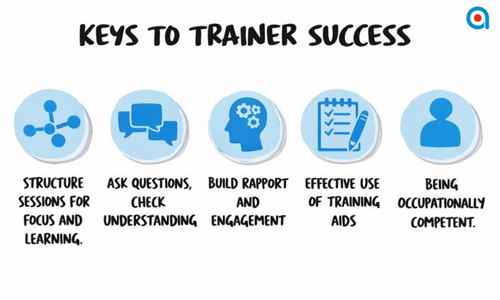
We develop managers using what we call the Five Pillars of Instruction:
- Structure – knowing how to structure short, focused training sessions
- Questioning technique – asking effective questions to check understanding and develop reasoning
- Personal qualities – building rapport, awareness, and emotional intelligence
- Use of aids – using tools and resources effectively rather than relying on slides
- Content – being occupationally competent in what is being trained
These skills are essential if managers are expected to train people properly. They are also skills that can be developed through structured trainer development, such as our Train the Trainer programmes.
Training vs Getting the Job Done
In high-pressure or operational environments, there is always a balance to strike.
When pressure is high, competent people are used to get the job done. During quieter operational periods, training should be the focus. This ensures that when pressure increases again, more people are capable and confident.
This balance requires planning, not firefighting.
So, Are Managers Supposed to Train?
Yes. Unequivocally.
Training is a core part of a manager’s role. Managers should know how to train, how to evaluate training, and how to ensure it’s working.
Failing to do this isn’t just a training issue. It’s a leadership issue. Ultimately, it disrespects both the people being managed and the organisation itself.
If organisations want better performance, consistency, and accountability, they must ensure their managers are equipped to train properly.
If you want to develop managers who can train effectively in the workplace, explore our Train the Trainer courses, explore our Leadership and Management programmes, or speak to our team on 0800 302 9344.
About the Author