We are using cookies to collect data that help us give you the best experience of our site, by continuing to use the site, you are agreeing to our use of cookies.
Read more


 0800 302 9344
 Info@targettrg.co.uk
Coaching Skills Every Manager Should Have
- April 01, 2026
Leadership today requires more than managing tasks and meeting targets. Managers are increasingly expected to support development, build confidence and create environments where people can perform at their best. It is not easy being a successful manager.
This is where coaching skills become essential.
Many managers understand what good leadership looks like. However, applying it consistently in everyday conversations can be challenging. Coaching skills provide a practical way to bring leadership to life. We have included basic coaching skills on all our Leadership and Management Training. Look here at our coaching services https://targettrg.co.uk/courses/coaching
Rather than directing every action, managers who coach help their teams think more clearly, take ownership and develop confidence in their decisions.
These are the conversations that drive performance, these accelerate teams.
In This Article You Will Learn
In this article, we explore the key coaching skills every manager should develop, how these skills improve performance and engagement, and how managers can begin to apply coaching in everyday workplace conversations.
Why Coaching Skills Matter for Managers
Managers influence how people think, behave and perform at work, they are the role models for many.
When managers rely only on instruction, employees often become dependent on direction. While this can deliver short-term results, it can limit long-term development. This does not work and the older generations have had to learn to think differently due to generations like Gen Z.
Coaching is needed because coaching shifts this dynamic.
When managers use coaching skills, they encourage individuals to reflect, explore ideas and take ownership of their work. This builds confidence, strengthens problem-solving and improves engagement. And these skills need to be nurtured and developed, they are not just words.
Over time, teams become more capable, more independent and more effective.

Coaching Skill 1: Active Listening
One of the most powerful coaching skills is listening.
Not listening to respond but listening to understand. This needs to be practised and something I do on all my courses. I have quite a variety of listening skills exercises focusing on different themes or communication, basically not just words.
What needs to be understood is when managers listen fully, employees feel heard and valued. This creates trust and encourages much more open and honest conversations.
Active listening also allows managers to identify underlying challenges rather than just surface-level issues.
Often, what someone says first is not the real issue. Listening carefully with the correct intervention, which is not always a question, helps uncover what is really going on.
Coaching Skill 2: Asking Better Questions
Coaching is built on asking questions or half a question rather than giving answers.
Instead of saying, “Here’s what you should do,” a manager might ask, “What options do you think you have?”
This small shift changes the conversation completely.
Questions encourage thinking. They help individuals explore ideas, consider different perspectives and develop their own solutions.
Better questions lead to better thinking, and better thinking leads to better performance.
Coaching Skill 3: Encouraging Reflection
In busy workplaces, reflection is often the first thing to be lost.
Yet it is one of the most powerful tools for development.
Coaching creates the space for reflection, allowing individuals to step back, think more clearly and learn from their experiences. It turns day-to-day activity into meaningful development.
This is something we actively build into our leadership and management programmes through structured reflective practice.
We also support this through our management reflective journals, where we have developed over 60 different reflective journals on many themes (available on Amazon), designed to help Managers and Leaders build reflection into their routine. This helps move reflection from something occasional into something consistent and practical.
We are known for “throwing the monkey” Train the Trainer courses look here for more information https://targettrg.co.uk/courses/train-the-trainer-courses. We have incorporated these skills for managers and leaders into all our courses. The problem is managers unintentionally take on responsibility for problems that sit with their team.
Over time, this can create dependency, reduce accountability and increase pressure on the manager.
Through reflection, managers begin to recognise these patterns. They notice when they are stepping in too quickly and learn how to return ownership in a supportive way.
This is where coaching becomes powerful.
Reflection helps managers step back. Coaching helps them respond differently.
Together, they create a clear and practical process for developing both the manager and their team.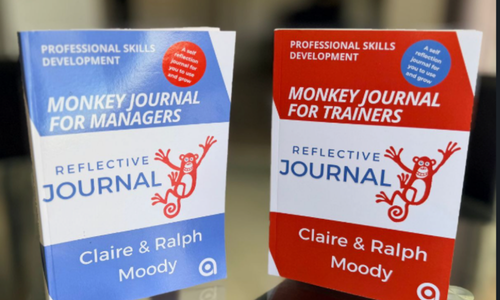
Coaching Skill 4: Giving Developmental Feedback
Feedback is an essential part of performance.
However, feedback is most effective when it supports development rather than simply highlighting problems. Everyone talks about the sandwich, but it is not just a sandwich.
One of my job many years ago was to give feedback on people’s feedback, I did this for many years. I fully understand the process of feedback, where the holes are, and how to deliver this effectively. It is a huge process when fully understood, but when it is fully understood, it is more powerful than anything, even more than the subject you are giving feedback back on.
Coaching-based feedback focuses on helping individuals understand their performance and identify ways to improve.
It encourages ownership and growth rather than defensiveness.
When feedback is delivered through a coaching approach, it becomes a tool for development rather than criticism.
Coaching Skill 5: Supporting Accountability
Coaching is not just about conversation; it is about action.
Managers play a key role in supporting accountability by helping individuals commit to clear next steps and follow through on them.
This does not mean controlling behaviour. It means supporting progress.
When individuals feel responsible for their actions, they are more likely to stay engaged and deliver results.
Bringing Coaching Into Everyday Leadership
Coaching does not require formal sessions or additional time. Leave that for the professional coaches.
It can be integrated into everyday conversations.
A question instead of an answer.
Listening instead of interrupting.
Encouraging thinking rather than giving direction.
These small changes create a significant impact over time, small changes work.
For organisations looking to embed this approach, developing coaching capability within managers is key. You can explore how this is supported through our coaching services and how it integrates into our leadership and management training programmes look here
Frequently Asked Questions
What are coaching skills for managers?
Coaching skills include listening, asking effective questions, encouraging reflection, providing feedback and supporting accountability.
Can managers learn coaching skills?
Yes. Coaching skills can be developed through training, practice and experience, and they can be applied in everyday workplace conversations.
How do coaching skills improve performance?
They help employees think independently, take ownership of their work and develop confidence in problem-solving, leading to stronger engagement and results.
Is coaching time-consuming for managers?
No. Coaching can be integrated into everyday conversations and does not require additional time, just a different approach.
Final Thoughts
The most effective managers today are not those who have all the answers.
They are those who know how to ask the right questions, create space for reflection and support others to think more clearly.
Coaching skills allow managers to move beyond directing work and start developing people.
And when people develop, performance follows.
If you would like to learn more about how coaching and leadership development can support your organisation, please get in touch with the team at Target Training Associates.
Contact us here on Tel 0800 302 9344 or via the link below.
https://targettrg.co.uk/contact-us
About the Author