We are using cookies to collect data that help us give you the best experience of our site, by continuing to use the site, you are agreeing to our use of cookies.
Read more


 0800 302 9344
 Info@targettrg.co.uk
Why Reflection Is the Most Overlooked Leadership Skill
- April 08, 2026

Leadership is often associated with action.
Making decisions. Solving problems. Moving things forward.
Managers are expected to be responsive, decisive and productive. In many workplaces, being busy is seen as a sign of effectiveness.
However, one of the most important leadership skills is often overlooked.
That is Reflection, something I know is extremely powerful when focused correctly.
The ability to step back, think clearly and learn from experience is what allows leaders to improve, adapt and lead more effectively over time.
A great way of looking at this is without reflection, leadership becomes reactive.
With reflection, leadership becomes intentional. And let’s face it how many of us over the years have experienced this, being part of this and taught to be so.
In This Article You Will Learn
In this article, we explore why reflection is a critical leadership skill, how it links directly to coaching capability, and how managers can use structured reflection to improve decision-making, performance and team development. It is an essential skill for development.
Why Leaders Rarely Reflect
Most managers and Leaders do not avoid reflection because they do not value it.
They avoid it because they do not have time.
Workplaces are so fast paced. Managers move from meeting to meeting, responding to issues, supporting their teams and managing priorities. Leaders are doing their thing but neither are reflecting correctly.
Reflection is often seen as something extra, something to do “when there is time.”
But that time rarely comes, it is bottom of the list.
As a result, many managers continue to operate in a cycle of reacting, solving and moving on, without pausing to consider what is really happening and what has just happened.
This limits learning and development, such missed opportunities.

The Link Between Reflection and Coaching
Coaching and reflection are closely connected. We cover this in detail on our coaching services, look here at our coaching services.
Coaching creates the space for reflection. It slows thinking down and encourages individuals to explore what is happening, rather than simply reacting to it.
Without reflection, coaching conversations can remain surface-level.
With reflection, they become developmental.
Leaders and Managers who use coaching skills help their teams step back and think more clearly:
What is really happening here?
What worked well?
What would you do differently next time?
These conversations build awareness, which is the foundation of growth.
Reflection is what turns experience into learning, it must be done properly with commitment and focus.
Reflection Improves Leadership Decisions
Many leadership decisions are made under pressure.
When time is limited, leaders and managers often rely on instinct or experience. While this can be effective, it can also lead to repeated patterns and missed opportunities.
Reflection allows leaders and managers to pause and consider their approach.
It helps them recognise patterns in behaviour, identify what is working and understand where change may be needed.
Over time, this leads to better decision-making.
Leaders become more thoughtful, more aware and more consistent in how they lead.
Building Reflection into Leadership Practice
Reflection does not need to be time-consuming.
It needs to be intentional and consistent.
This is where many managers benefit from having a structured approach.
Rather than relying on occasional moments of reflection, creating a process helps embed reflection into everyday leadership.
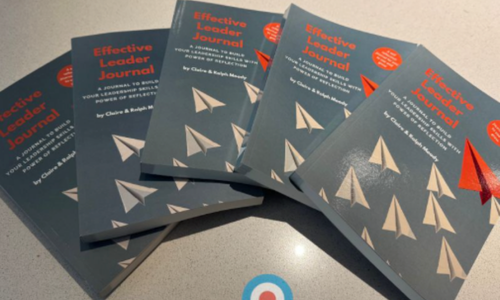
At Target Training Associates, we support this through our Leadership and Management reflective journals, which are designed to guide thinking and support ongoing development.
We have developed over 60 different reflective prompts and tools, available through our journals on Amazon, to help managers build reflection into their routine. Look here for our top selling Leadership Journal.
This gives leaders a practical way to step back, think more clearly and learn from their experiences. Then discuss with their coaches on coaching sessions.
Reflection becomes something they do regularly, not something they intend to do. It only takes a few minutes and a few minutes a day to build the habit.
Reflection as a Leadership Process
Reflection is most effective when it becomes part of a consistent process. We have included essential coaching skills on all our Leadership and Management courses see here or contact us, details below, for our latest brochure.
Small, regular moments of reflection can have a significant impact over time.
Leaders and Managers may take a few minutes at the end of the day, after a meeting or following a key decision to consider:
What went well?
What could have been handled differently?
What have I learned from this?
Using structured tools such as reflective journals helps make this process easier and more sustainable.
Over time, this builds stronger self-awareness, better decision-making and more effective leadership behaviour. It can be very powerful to self-coach and really put a focus to the learning.
Bringing Reflection Into Everyday Conversations
Reflection is not just an individual activity.
It can also be built into team conversations.
Leaders and Managers who encourage reflection within their teams create a culture of continuous learning.
Simple questions at the end of a task or discussion can make a difference:
What worked well?
What would we do differently next time?
These small moments encourage teams to think more deeply about their work and continuously improve.
Over time, reflection becomes part of how the team operates.
Frequently Asked Questions
Why is reflection important for leaders?
Reflection helps leaders learn from experience, recognise patterns and improve decision-making. It allows leadership to become more intentional rather than reactive.
How does reflection link to coaching?
Coaching encourages reflection through questions and conversation. It helps individuals think more clearly and learn from their experiences.
About the Author